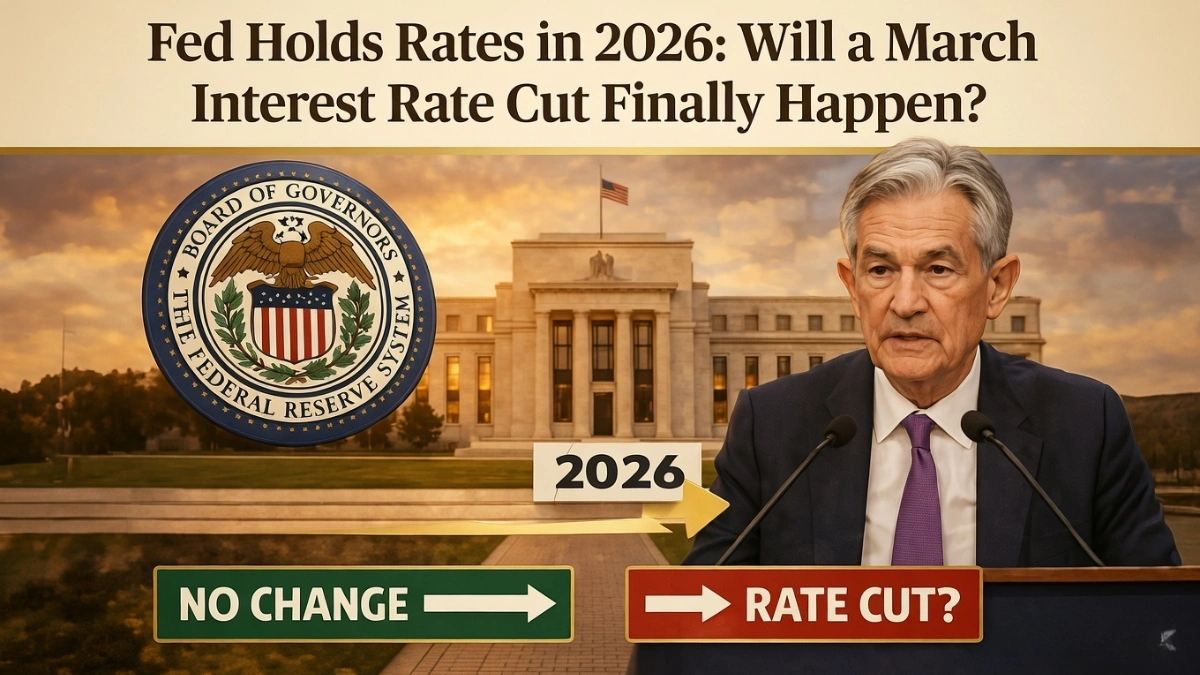
The Federal Reserve began 2026 by keeping interest rates unchanged, a decision that has sparked intense discussion among economists, investors, and financial markets. After a period of aggressive rate hikes in previous years aimed at controlling inflation, the central bank has now chosen to pause and assess economic conditions. This move has raised a key question across financial markets: could the Federal Reserve begin cutting interest rates as early as March 2026? The answer depends on several economic indicators including inflation trends, employment data, and overall economic growth.
Understanding why the Fed held rates steady and what could happen next is important for borrowers, investors, and anyone watching the direction of the U.S. economy.
Why the Federal Reserve Kept Rates Unchanged
The Federal Reserve’s main goal is to maintain price stability while supporting economic growth. In recent years, the central bank increased interest rates to slow inflation and stabilize the economy. By the start of 2026, inflation had shown signs of easing compared to previous highs. Because of this progress, the Fed decided to hold interest rates steady rather than continue raising them.
Keeping rates unchanged allows policymakers time to evaluate whether inflation is continuing to decline and whether the economy remains stable. This pause helps avoid unnecessary economic slowdown while monitoring future risks.
How Interest Rates Affect the Economy
Interest rates play a crucial role in shaping economic activity. When rates are high, borrowing becomes more expensive for consumers and businesses. Higher borrowing costs can slow spending on homes, cars, and business investments. This helps reduce inflation but may also slow economic growth.
On the other hand, lower interest rates make borrowing cheaper and encourage spending and investment. Because of these effects, the Federal Reserve carefully adjusts rates depending on economic conditions.
Could a Rate Cut Happen in March 2026
Many financial analysts are watching upcoming economic data to determine whether a rate cut could occur in March. If inflation continues to decline and economic growth slows, the Fed may consider lowering interest rates to stimulate the economy.
However, if inflation remains higher than expected, policymakers may decide to keep rates steady for a longer period. The central bank typically takes a cautious approach to ensure that inflation remains under control before reducing rates.
Key Economic Indicators the Fed Is Monitoring
The Federal Reserve relies on several important indicators when making decisions about interest rates. Inflation data remains the most critical factor because controlling price increases is a primary goal of monetary policy.
Employment statistics are also closely watched because a strong labor market signals economic stability. Consumer spending, housing market activity, and business investment trends also influence policy decisions. These indicators help policymakers determine whether the economy requires tighter or looser monetary policy.
Possible Scenarios for Interest Rates in 2026
| Economic Condition | Possible Fed Action |
|---|---|
| Inflation continues to decline | Potential rate cut |
| Inflation remains elevated | Rates remain unchanged |
| Economic slowdown appears | Rate cuts possible |
| Strong economic growth | Rates may stay higher |
These scenarios show how economic trends can influence the Federal Reserve’s decisions.
Impact on Borrowers and Investors
Interest rate decisions directly affect millions of Americans. Borrowers with mortgages, credit cards, or loans often feel the impact first when rates change. If the Fed eventually cuts rates, borrowing costs may decline and loans could become more affordable.
Investors also closely monitor interest rate policy because it influences stock markets, bond yields, and investment strategies. Even small changes in interest rates can have a major impact on financial markets.
Why the March Meeting Is Important
The Federal Reserve holds several policy meetings each year to evaluate economic conditions and adjust interest rates if necessary. The March meeting is particularly important because it will reflect the latest inflation and employment data from early 2026.
If economic conditions show continued improvement, policymakers may begin considering rate cuts. However, the Fed may also choose to maintain a cautious approach to ensure inflation remains under control.
Conclusion
The Federal Reserve’s decision to leave interest rates unchanged at the start of 2026 reflects a cautious approach to managing inflation and economic stability. While financial markets are hopeful that a rate cut could occur in March, the decision will depend on upcoming economic data.
Inflation trends, employment conditions, and overall economic performance will play key roles in determining the direction of interest rates. Until clearer signals emerge, the Fed is likely to continue monitoring the economy carefully before making major policy changes.
Disclaimer: This article is for informational purposes only. Monetary policy decisions and economic forecasts may change based on future announcements by the Federal Reserve.